Magic Link - Quinto Andar

Product Design
Overview
Transforming chaos into clarity
Quinto Andar is a large real estate company here in Brazil. At QuintoAndar, I led the redesign of Magic Link, an internal back-office platform used by support analysts and managers to handle all customer interactions.Previously, the platform was confusing and fragmented. Analysts needed to open at least five different tools to complete a single case.
My goal was to centralize workflows, simplify navigation, and build a shared understanding of users and their processes across the company.
The Challenge
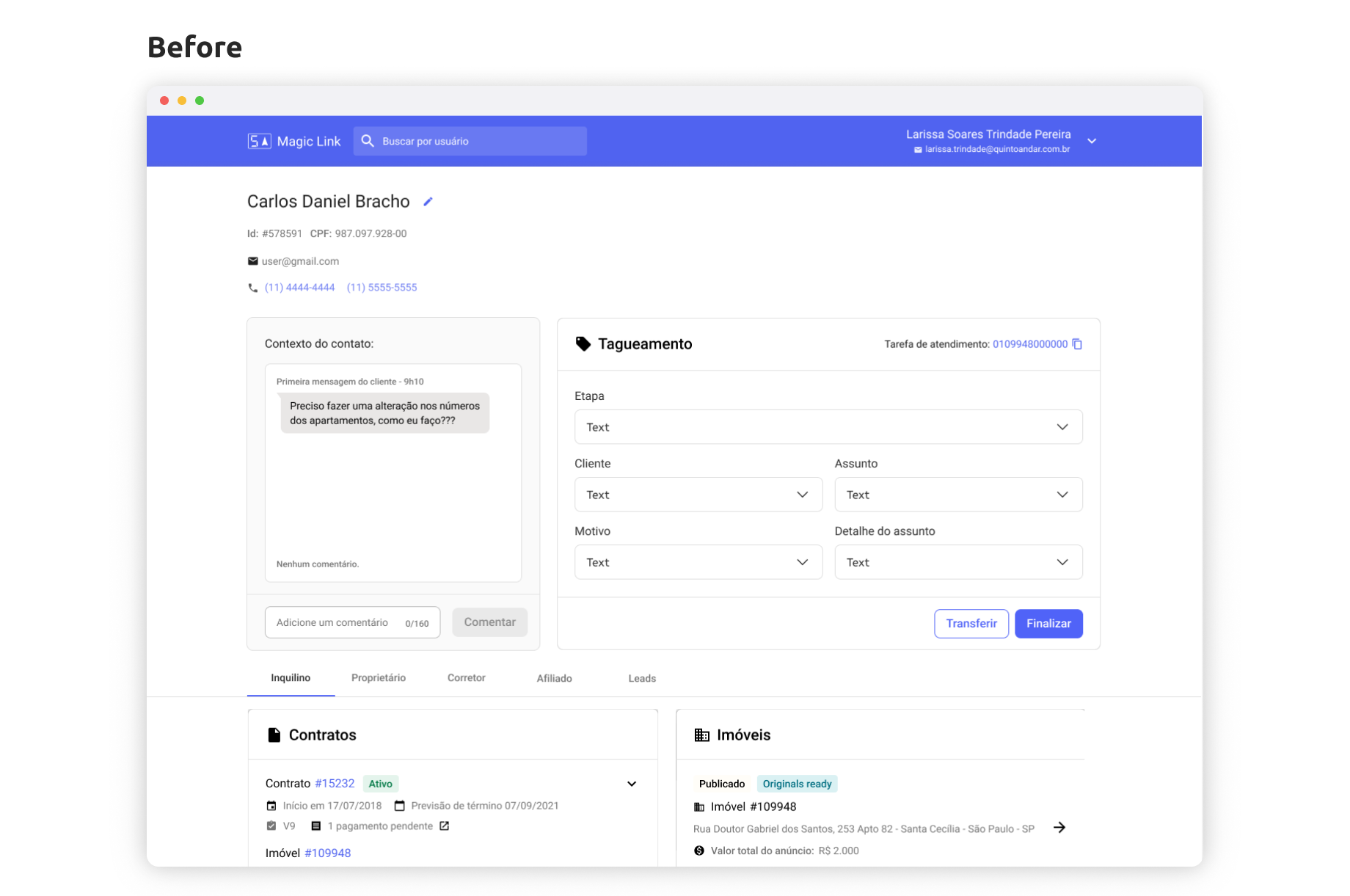
Before the redesign, analysts had to switch between multiple tools. The result? Slow response times, data inconsistencies, and a poor user experience. Our NPS was low, and Quinto Andar wanted to improve this metric.
Before: 5+ tools per case, long scrolls, scattered data.
Building a Deep Understanding of the People Behind the Process

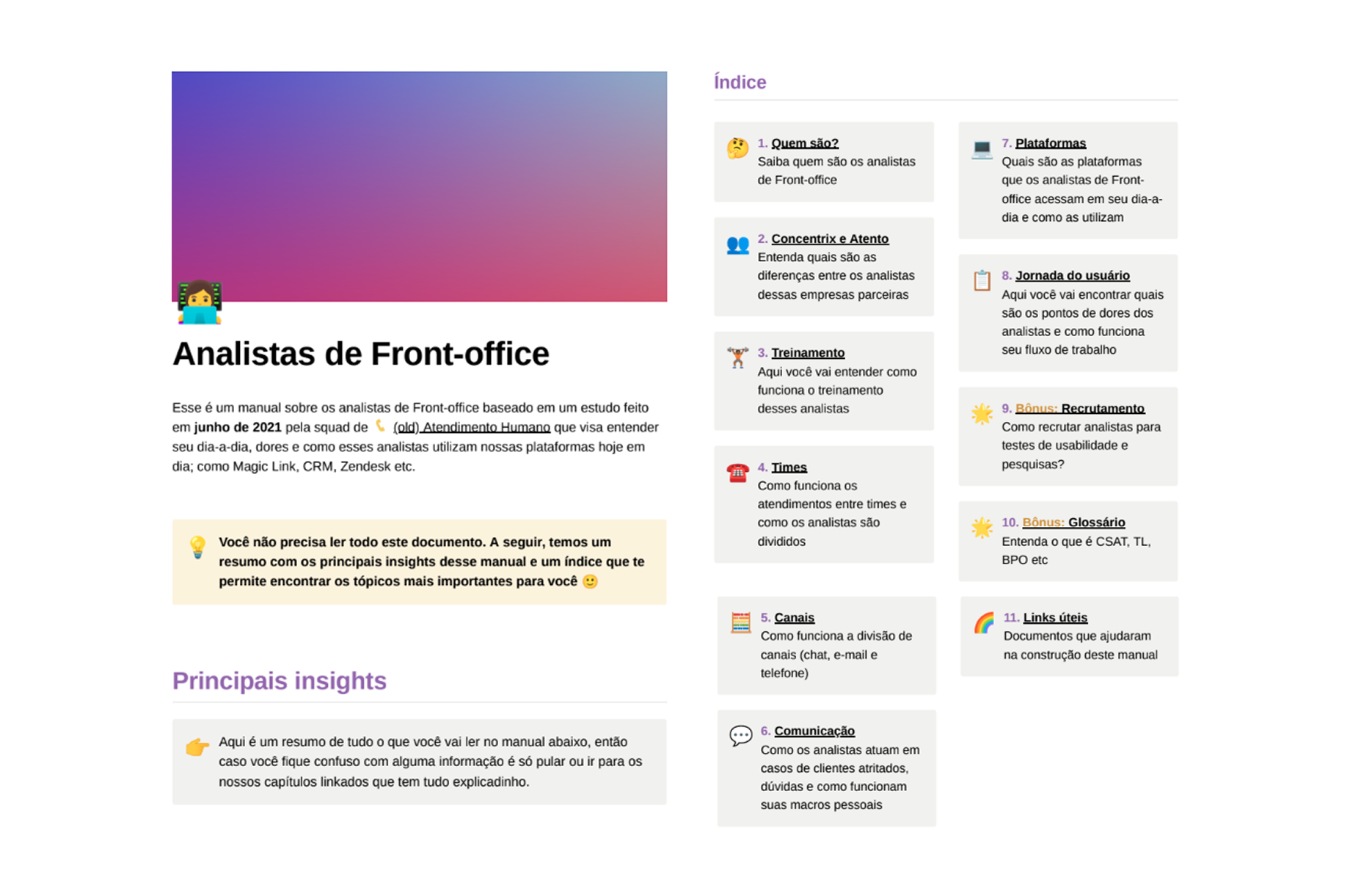
I documented the entire research process in Notion to create a company-wide knowledge base, later used by various QuintoAndar teams.

Research Actions:
• Interviews with analysts and managers to understand key difficulties, workflows, and training gaps.
• Monitoring real support interactions to understand how they work.
• Mapping stakeholders across teams that contributed data to Magic Link.
• Behavioral insights: turnover rates, work environment, evaluation methods, peak hours, and daily challenges.
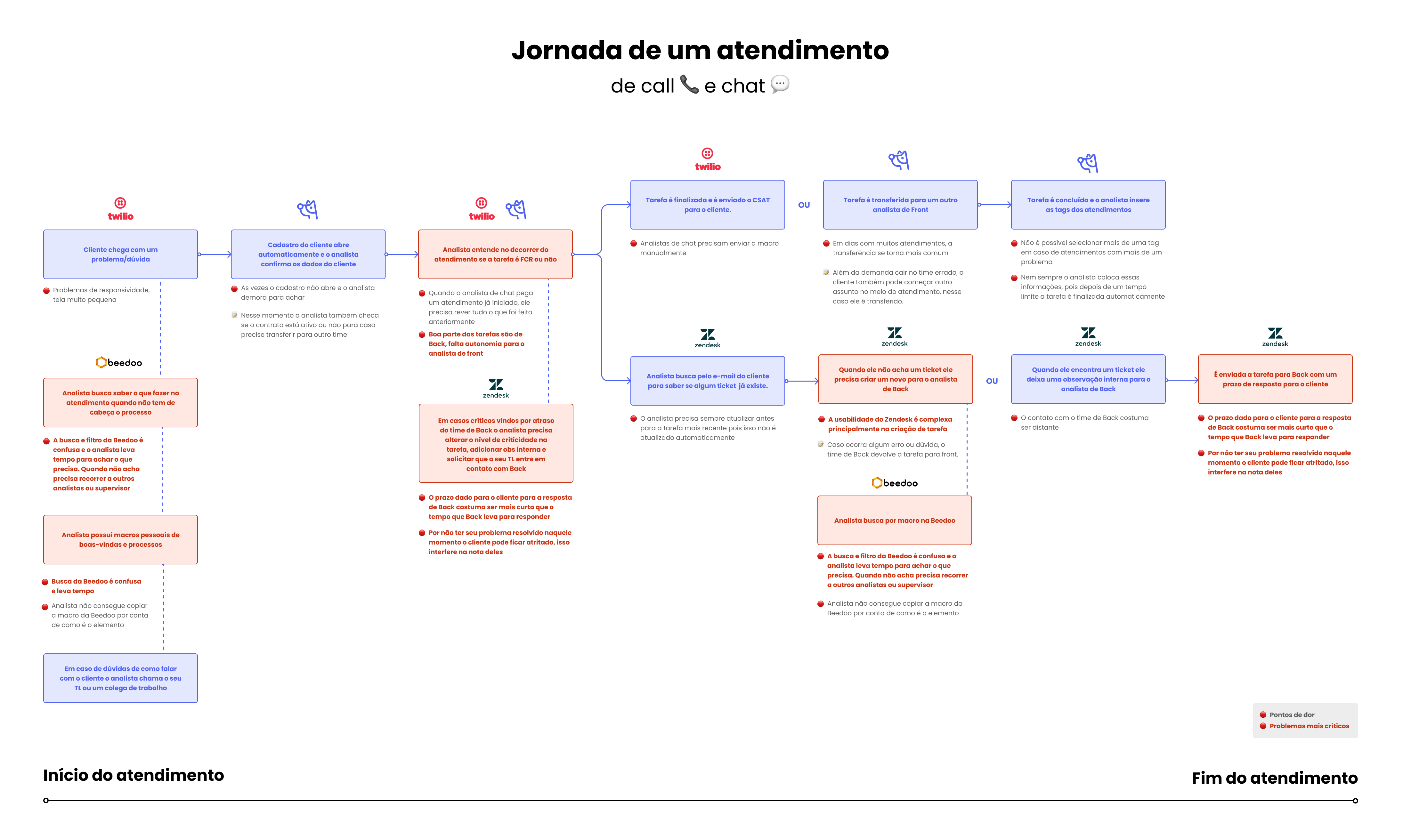
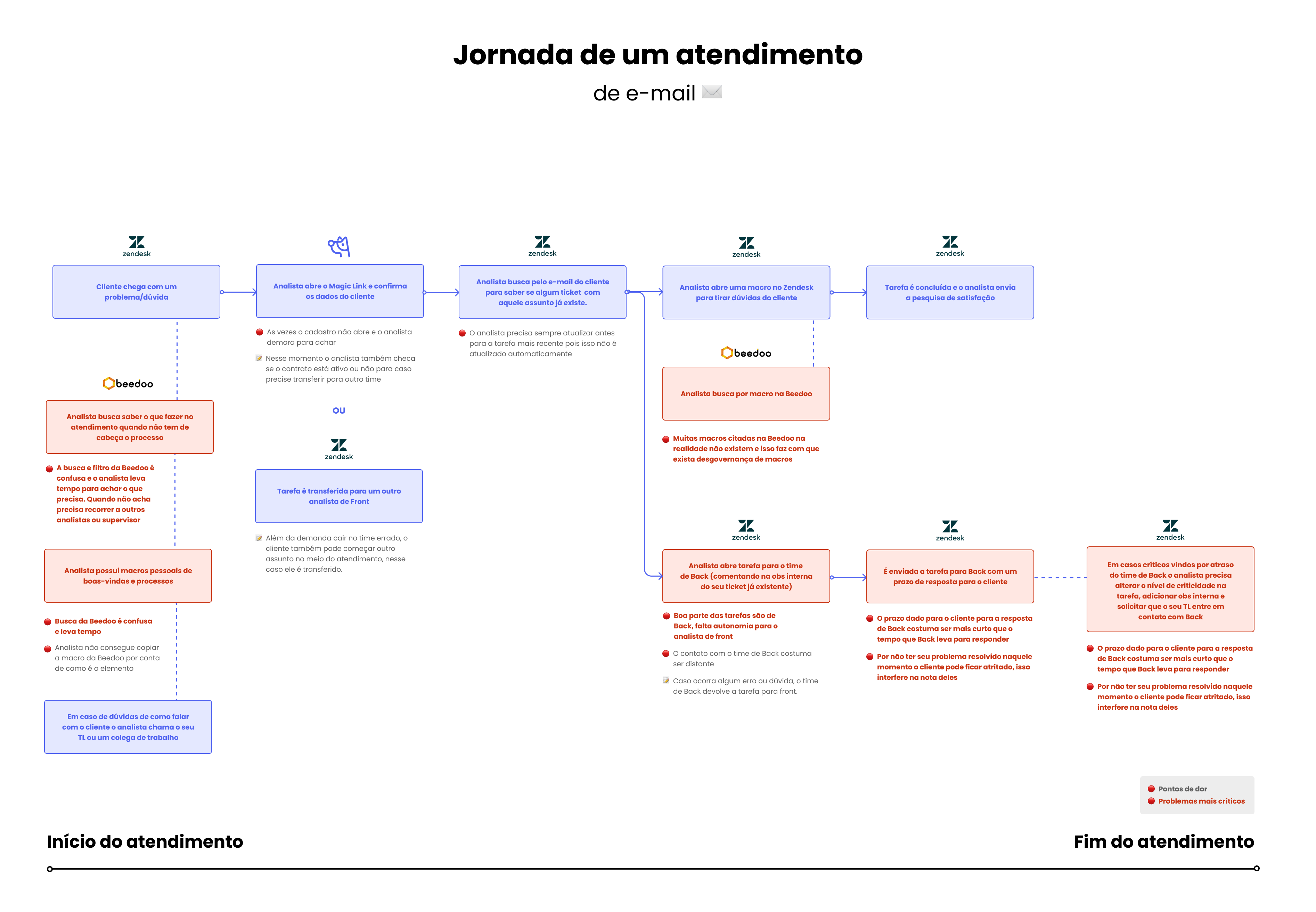
• Mapping the user journey to visualize each step and each platform involved.

This documentation became the primary source of information about support operations, helping teams align priorities and dependencies.
Research & Discovery
Product Design
Fev 2021
Turning research into shared understanding

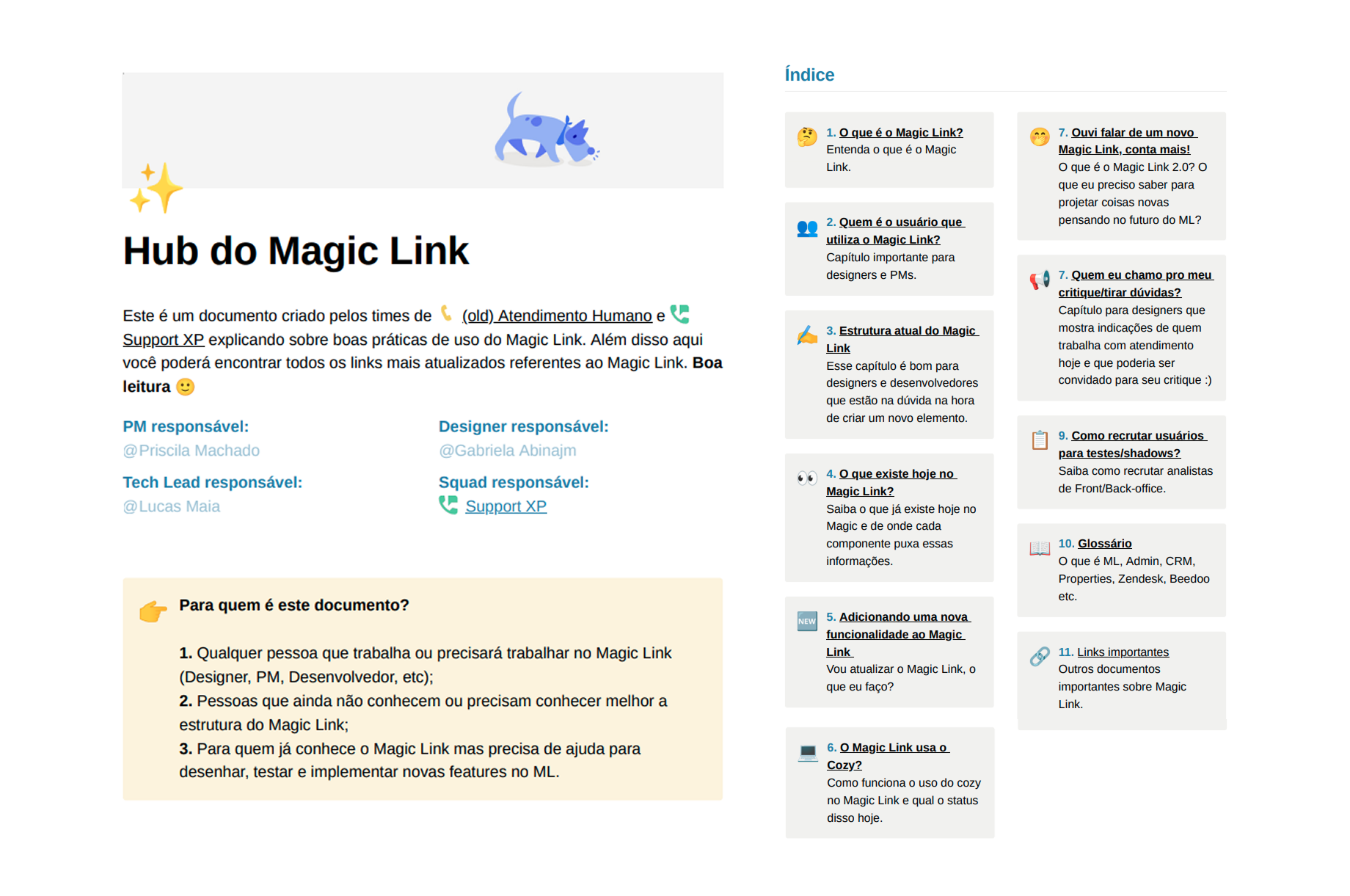
To spread awareness, I created a company-wide presentation explaining how Magic Link worked, how data should be fed into it, and how different tools (such as Twilio) integrated with it.

This “Magic Link Hub” became a knowledge portal with:
• Integration guides
• Design critique process documentation
• Shadowing guidelines (live observation of analysts)
• Maintenance and update best practices
Evangelizing the Company
Product Design
Fev 2021
From complexity to structured information
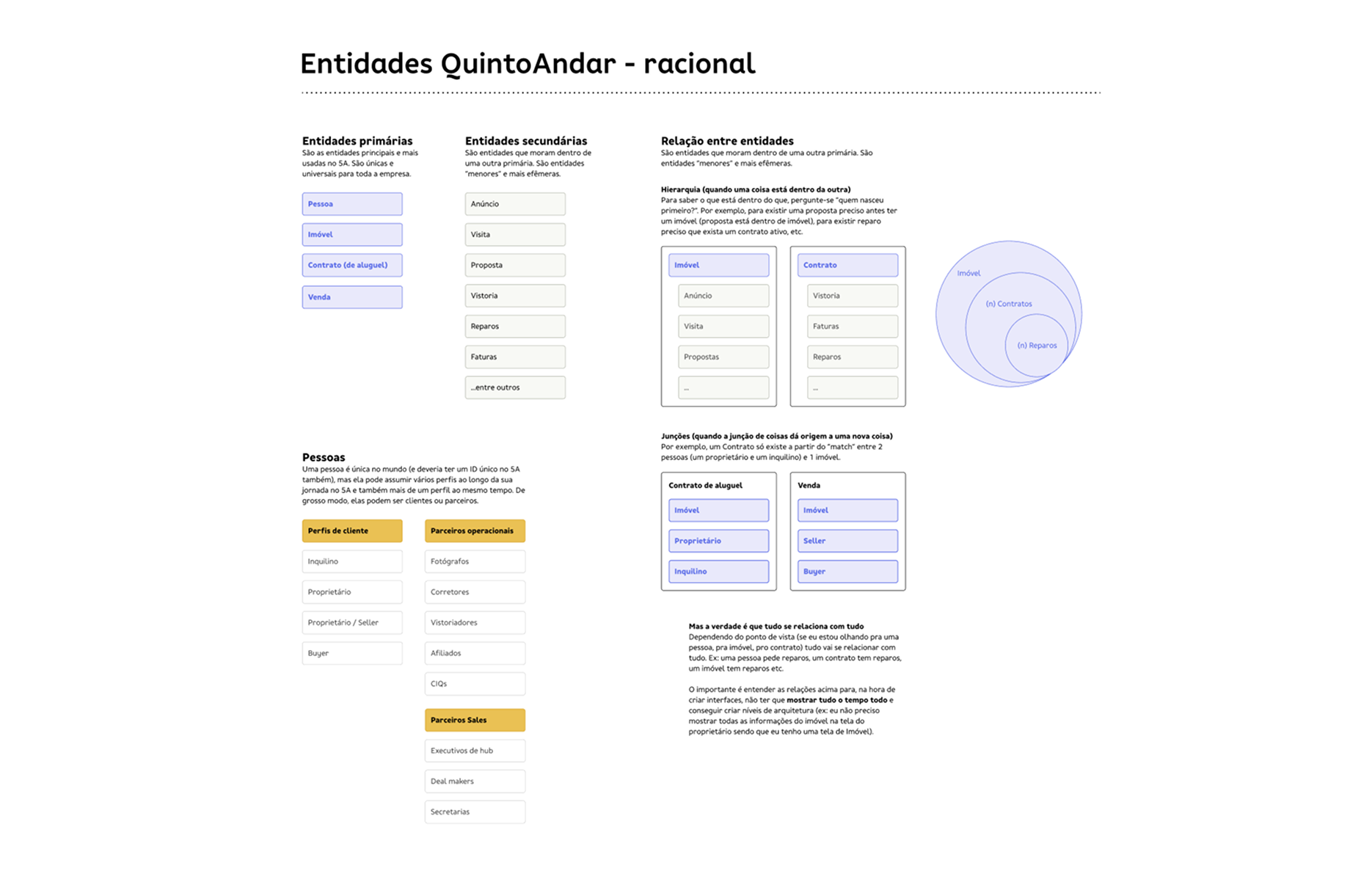
Once the research revealed how analysts actually worked, I started restructuring Magic Link information architecture.
Main actions:
• Mapped primary and secondary entities
(e.g., Person, Property, Contract, Rent, Sale → nested entities like Visits, Repairs, Proposals, Invoices).
Defined relationships between entities for faster access and logical grouping.
Audited all existing features, deciding which to keep, merge, or remove.
Organized the Figma workspace by action type (“plugins”) to reduce file load and make collaboration smoother.
Redesign Strategy
Product Design
Fev 2021
Co-creating with analysts
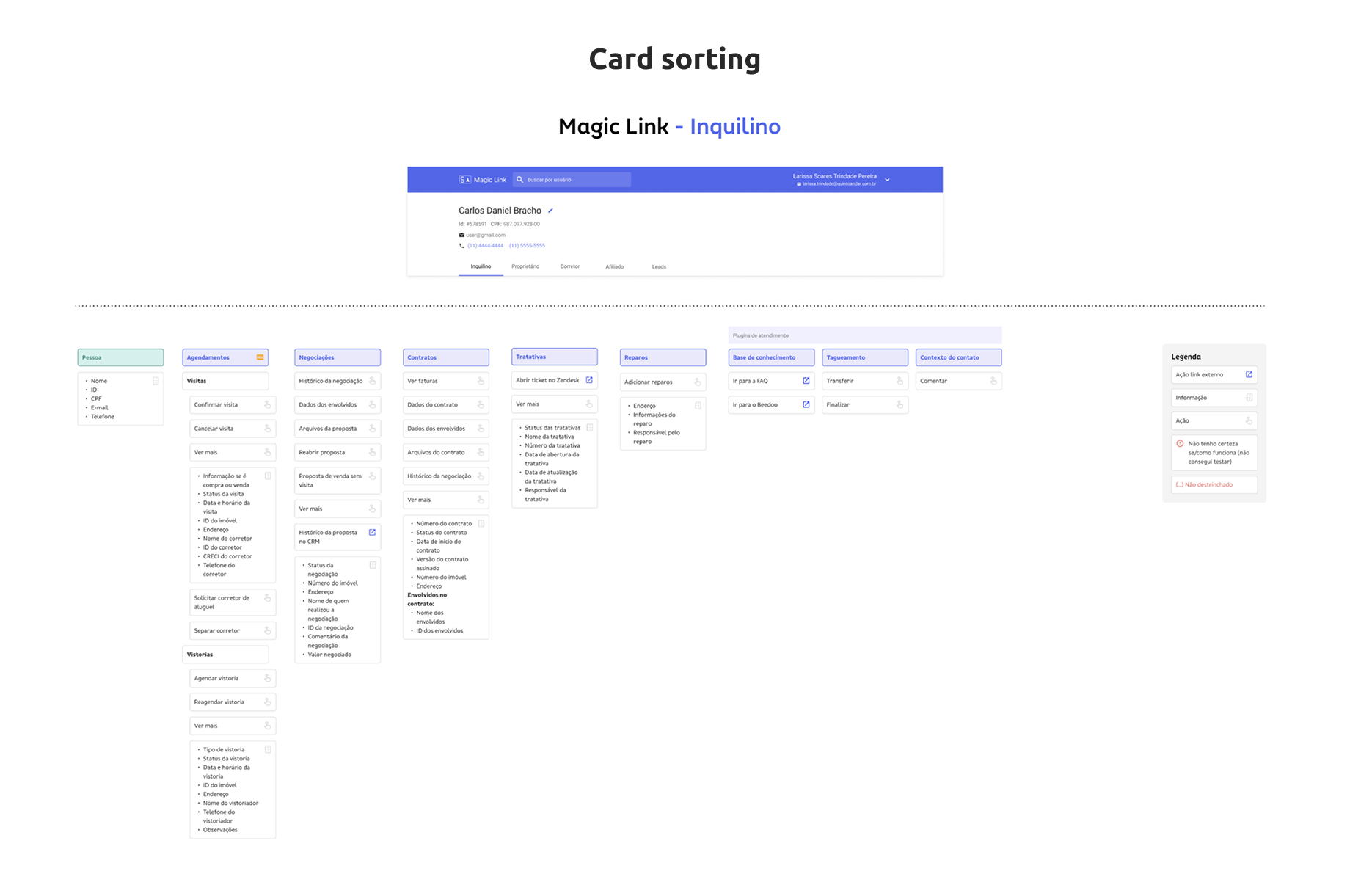
I ran card sorting sessions and usability tests with support analysts to validate the new hierarchy and menu structure.
This ensured the redesign reflected their real mental models and daily needs.
Methods used:
Open & closed card sorting (information grouping)
Usability testing on the new flow prototypes
Continuous feedback rounds with analysts
Validation & Testing
Product Design
Fev 2021
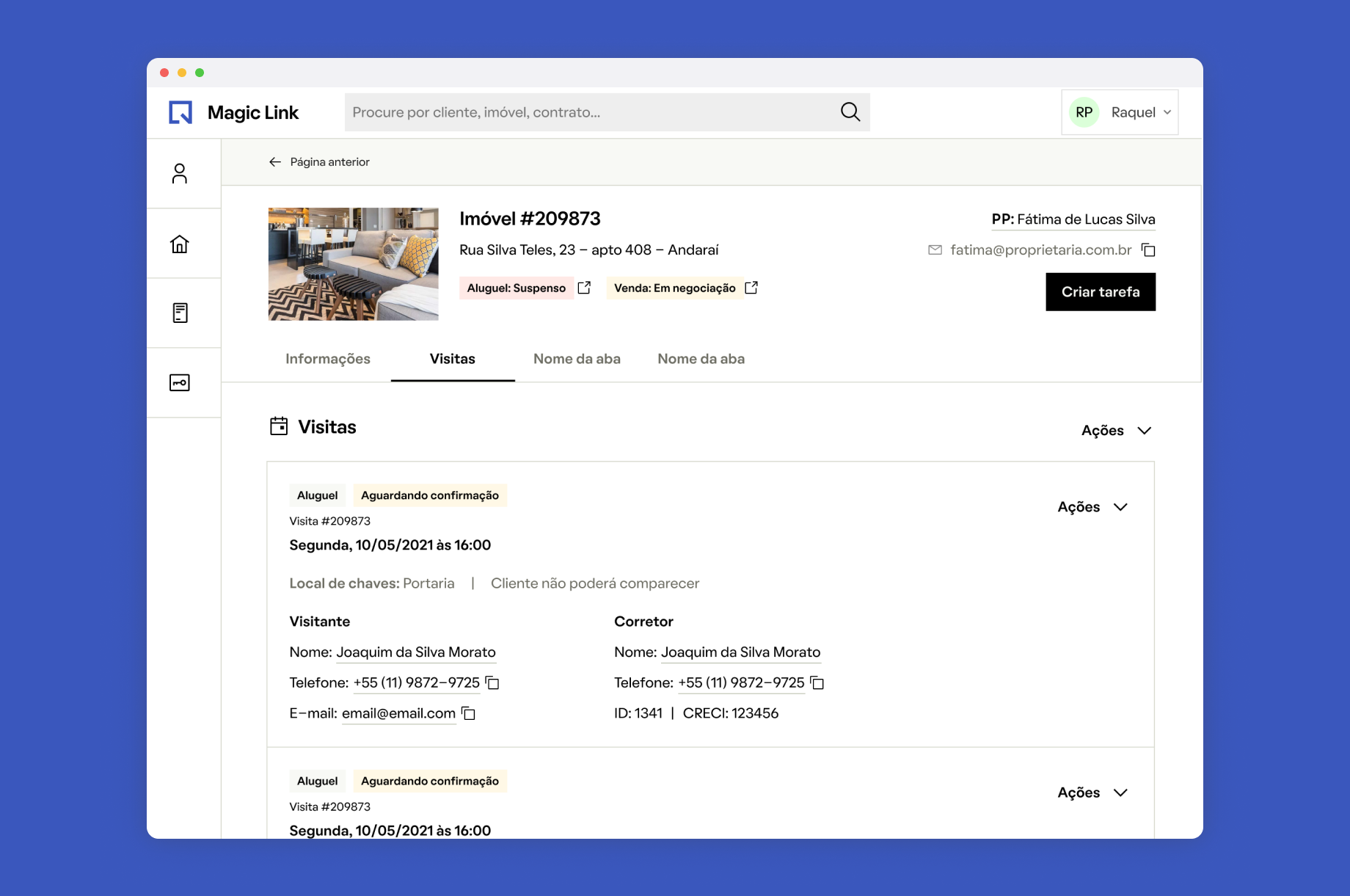
Final Design: Magic Link 2.0
A centralized, modular back-office platform
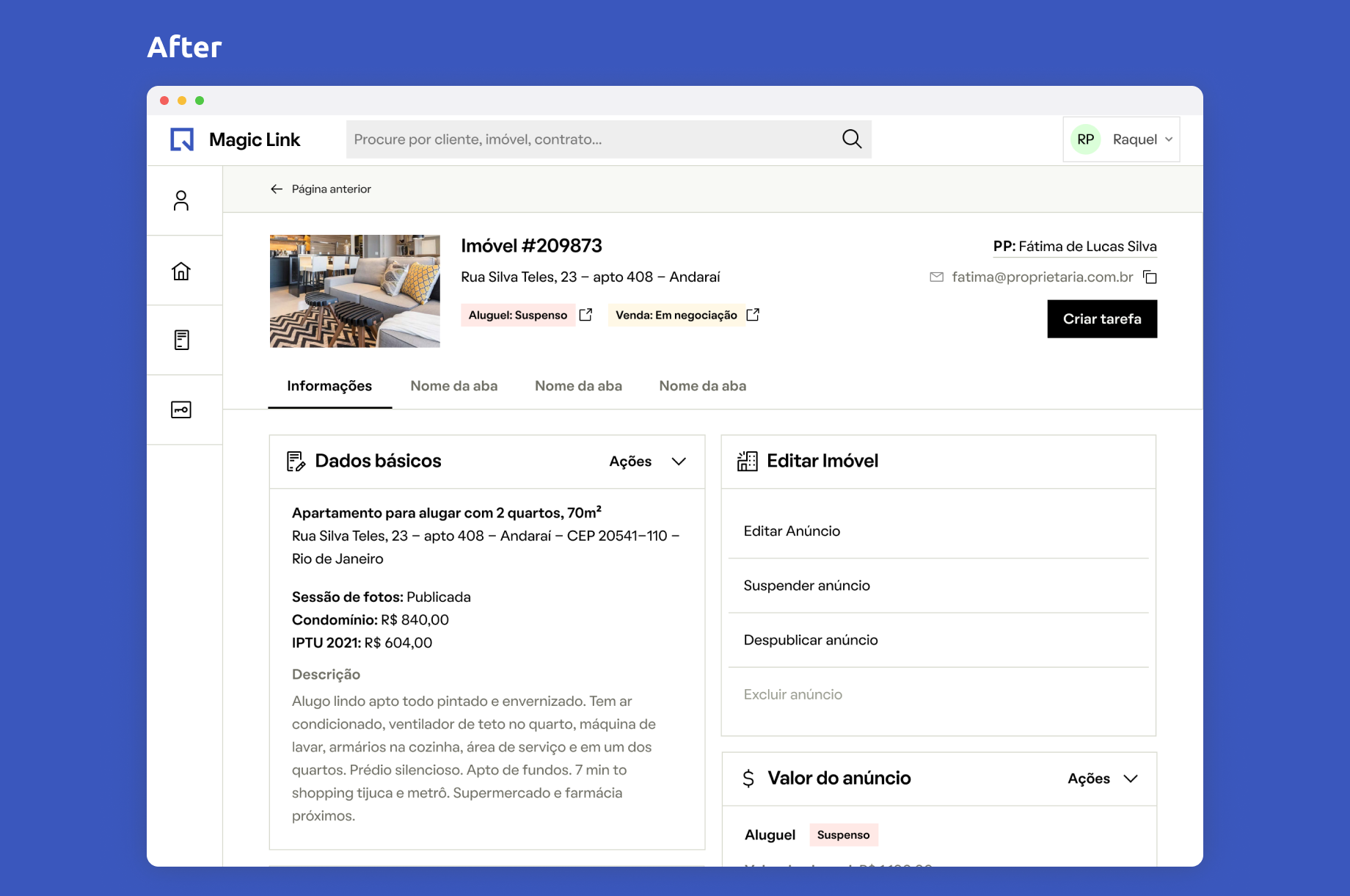
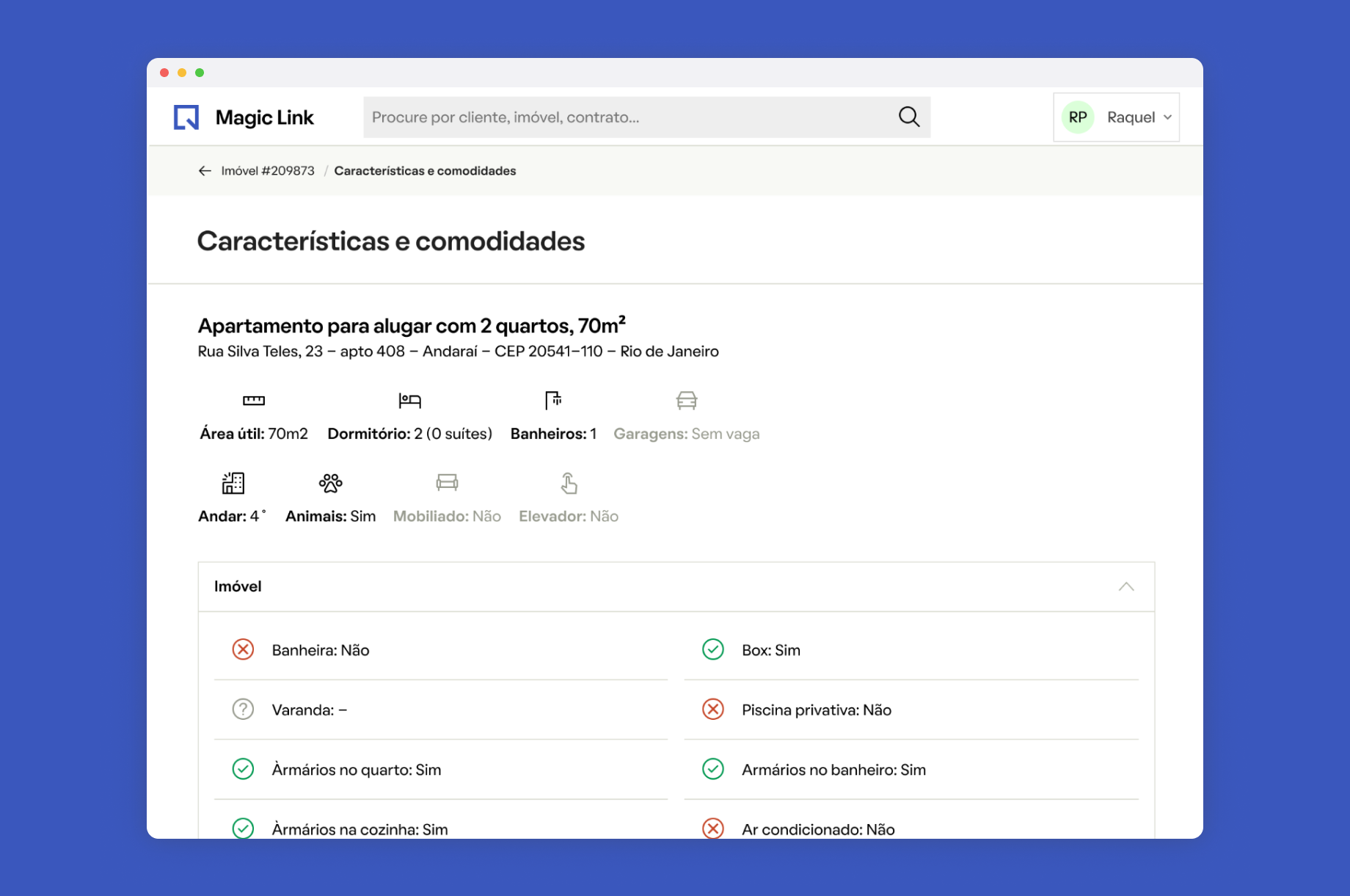
The new Magic Link 2.0 featured:
Clear entity hierarchy (e.g., Properties, Contracts, Repairs)
Simplified navigation and reduced scroll
Modular components for different actions
Lighter UI with better readability and fewer distractions
Final Design: Magic Link 2.0
Product Design
Fev 2021
Impact
Company-wide adoption and operational efficiency:

Improved task completion speed and fewer context switches.
Documentation became a reference for all QuintoAndar teams.
Enhanced collaboration between Product, Ops, and CX.
Established a foundation for future scalability (Magic Link 2.0).
Learnings
Research as alignment, not just discovery

This project showed me that research can transform not only products but also organizations, aligning teams, improving processes, and building shared understanding. I also learned to:
Document deeply and transparently for long-term impact.
Simplify complex systems through clear hierarchies.
Drive change through collaboration and storytelling.
Design isn’t just what users see: it’s how the organization understands them.